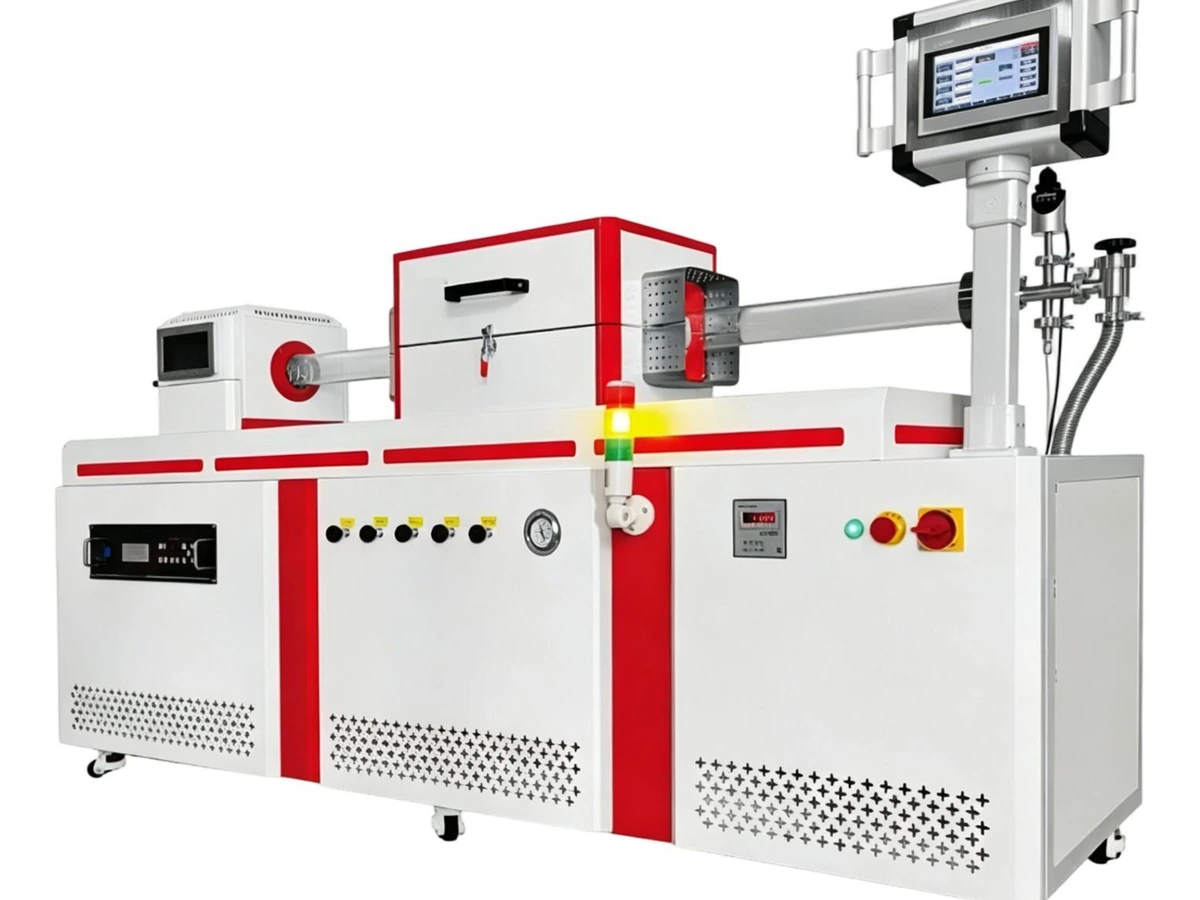
The basic difference
CVD tube furnaces rely on thermal energy and process gases to form films or coatings. PECVD uses plasma assistance, which can support deposition at lower temperatures.
Temperature and substrate sensitivity
If the substrate can tolerate higher temperature, thermal CVD may be suitable. If the process requires lower deposition temperature or special film properties, PECVD may be considered.
Tube size and gas line design
Buyers should specify quartz tube diameter, heating zone length, gas types, gas flow control, vacuum pump requirement and exhaust treatment.
Questions before quotation
What material will be deposited? What precursor gas is used? What is the working temperature? What is the tube diameter? Is plasma required?
How Shanghai Dingzhi positions the system
Shanghai Dingzhi supplies CVD and PECVD tubular furnace systems for semiconductor, solar cell, nanomaterial and functional coating research or pilot work.
Need a furnace recommendation?
Send material, process, target temperature, chamber size, atmosphere and destination country. The engineering team can recommend a practical furnace family and configuration path.
Submit technical RFQ