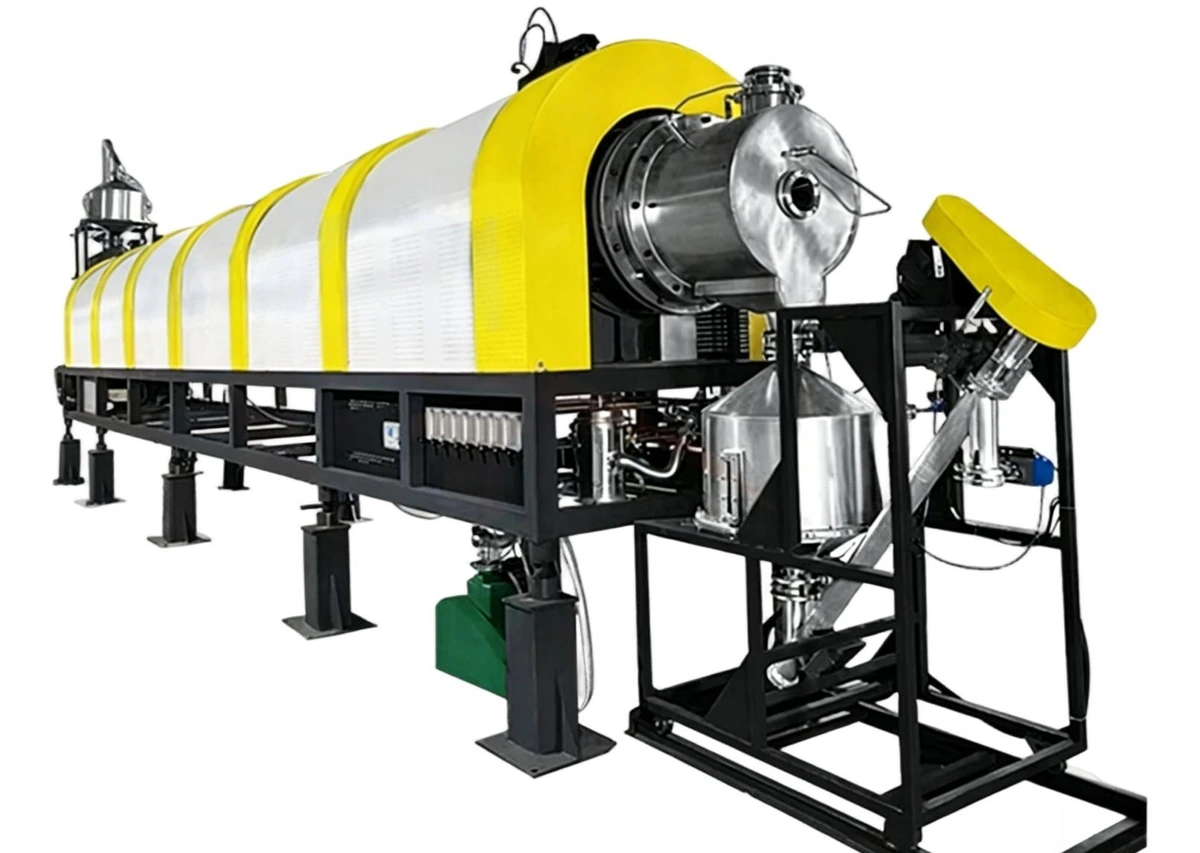
Different material movement
Rotary kilns rotate the furnace tube so powder or particles move dynamically. Mesh belt furnaces carry parts or products on a belt through controlled heating zones.
When to choose rotary kiln
Rotary kilns are suitable for powder, granules and materials that benefit from dynamic mixing and continuous feed.
When to choose mesh belt furnace
Mesh belt furnaces are better for parts, small components or products that need continuous conveying, stable placement and multi-zone temperature control.
RFQ comparison points
For rotary kilns, define tube diameter, length, rotation speed, material type and feed rate. For mesh belt furnaces, define belt width, product size and hourly output.
Commercial recommendation
If the material is powder-like, start with rotary kiln discussion. If the material is part-like and requires stable conveying, start with mesh belt furnace discussion.
Need a furnace recommendation?
Send material, process, target temperature, chamber size, atmosphere and destination country. The engineering team can recommend a practical furnace family and configuration path.
Submit technical RFQ